

The
Internet has undeniably become more social, visual and viral. But to date almost all of that
evolution has occurred on social networks.
In
the age of Big Data and e-commerce, where there is a real, measurable business
benefit to “owning” your online audience, brands are re-thinking the
marketing tactic of putting their social efforts almost exclusively into social
networks that control the data, reach and audience.
Today,
brands are attempting to lure customers and potential customers back to their
websites with rich social experiences, like the photo- and video-sharing that
has made networks like Vine and Instagram so popular.
Visual content marketing platforms
(such as Shuttlerock), are providing website owners more
control over user generated content.
User generated
content influences purchasing
The
value of these social experiences is clear. Millennials spend more than five hours
per day consuming user-generated content (UGC), according to a study conducted
by Ipsos and Crowdtap. The study also showed that
user-generated content is 20 percent more influential on Millennial’s
purchasing decisions than any other type of media, with an average of 59
percent of Millennials trusting UGC.
Websites
that leverage these user-generated photos and videos to attract traffic and retain a loyal audience see a
payoff in both eCommerce sales and brand loyalty.
Peer reviews create
more trust
User-generated content is rising in popularity even
as the effectiveness of traditional forms of online advertising is diminishing.
For example, only 19 percent of Millennials trusted online banner ads — 49
percent less than trust peer reviews.
Here
are five steps companies can take to incorporate a social element into their
websites and harness the power of user-generated content to drive sales:
Step 1. Build excitement about your brand
The first ingredient of a successful
social website is a highly motivated audience. Just like Facebook or Instagram
only work if people are motivated to snap and share photo or write status
updates, a social website only works if the customer base of a brand is willing
to participate. Use social media to drive customers to your website. Give them
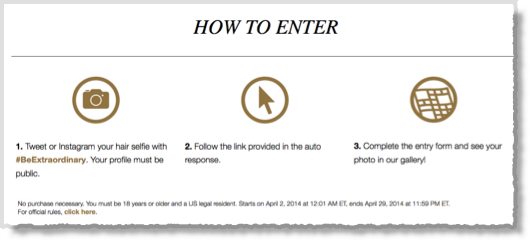
friendly tips on what makes a great selfie submission.
\

Use
email newsletters to advertise your new social capabilities. Build excitement
by giving your customers prizes and giveaways as incentives to interact with
you online. And consider ways to convince customers to draw their friends into
the conversation as well, through campaigns that reward referrals.
Step 2: Unlock “User Generated Content”
Once you build an engaged audience, you
want to turn these website viewers into content producers. Your customers have
the photos, videos and reviews that can powerfully influence fellow customers.
But getting them to contribute content can be tricky. Start off by offering
incentives. They don’t have to be prizes; consider choosing content-contributing
consumers to feature in email newsletters or pick the customer with the best
photo submission as your new fashion cover model. Incentives that tie into the
brand message reinforce the marketing strategy. Pick an incentive that you know
will mobilize your customer base and watch the content roll in.
Be sure to use a marketing software
platform that has a simple and easy way for customers to authorize the photos
submission for other uses. This steers you away from the legal landmines of
using social content for other marketing purposes without permission, unlocking
the full potential of user-generated photos and video.
Step 3: Ask for submissions by hashtag
Use social media as a content funnel
that is activated by hashtag. Ironman used the hashtag #IRONMANTraining to get
race participants to share photos of their training swims, runs and rides.
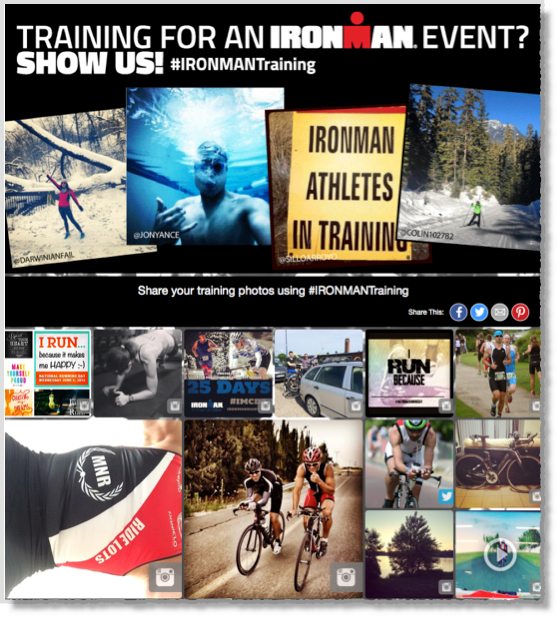
Using a hashtag, brands can pull
together content submissions from across multiple social networks, including
Instagram, Facebook or Twitter. The hashtag is both a mechanism for content
submissions, and a way for brands to expand their social media footprint at the
same time.
Some tips to effective hashtag use:
·
Promote the campaign hashtag on social,
through email blasts and on your website.
·
Set a deadline
·
Advertise the prize to build momentum.
Step
4: Turn customers into models
As the banner ad fades and staged,
contrived photography loses its punch, user-generated content is being asked to
fill in as a powerful brand image source. Imagine browsing a fashion retailer’s
website and instead of seeing a bunch of posed models, coming across real
photos of real people wearing a brand’s clothing in real-world situations.
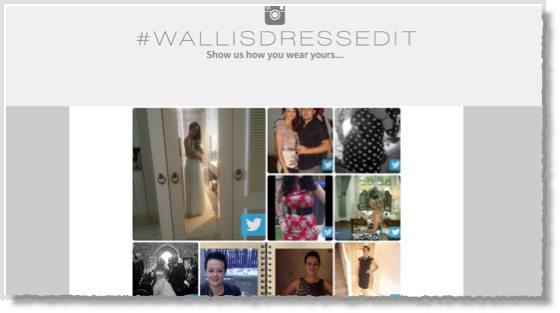
UK and Ireland fashion retailer Wallis
gathered customer photos through a “#WallisDressedIt” campaign. The campaign
inspired social media users to submit high-quality photos of
customers-as-models that were then showcased on the Wallis website.
Brands get value out of this
arrangement in two ways. Their website becomes much more authentic and
relatable, and brands can save big on the pricetag for photo shoots and video
production.
As an added bonus, the consistent use
of user-generated content brings brands and consumers closer together in a
two-way relationship that makes customers feel like they are a participating
part of a brand’s marketing strategy.
Step 5: Re-use customer photos
User-generated content is versatile,
and companies should maximize the impact of their customer’s best work by using
high-quality photos in as many ways as possible.
Try for a user-generated grand slam by
seeing if photos submitted on social can be used on the website, in email
newsletters, on marketing collateral and in social advertising.
Some brands are taking the use of UGC
one step further by suggesting eCommerce products alongside customer photos,
giving website visitors a chance to click through and purchase the items they
see their friends, acquaintances or fellow customers wearing.
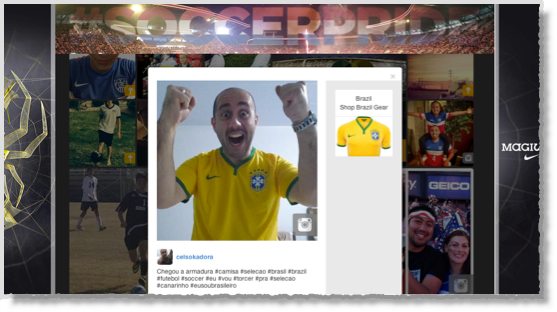
SoccerPro used photos submitted through
their #SoccerPride photo campaign to generate eCommerce suggestions from their
online stores. Customers can browse fellow soccer fans photos on SoccerPro.com,
and see clickable product suggestions right alongside the user-generated
content.
Just like social media unlocked the
power of millions of everyday citizens to become published writers photographers
and videographers, social capabilities on corporate websites will turn
consumers into content marketers. The brands that tap into this powerful
user-generated content and leverage it to influence a new generation of savvy
consumers will reap the rewards of sales driven by consumer content.
Guest author: Colleen
Horan is director of product marketing at Offerpop, a digital marketing
software company that helps audiences connect with brands.

No comments:
Post a Comment